Voita Electronic Voita Electronic

China Top 10 Solar Power System Manufacturers 2026

Time:2026-09-12 Author:Amelia
0%

China’s solar manufacturing sector now sits at the centre of the global energy transition. IRENA’s Renewable Capacity Statistics 2025 reported 585 gigawatts of new renewable capacity worldwide in 2024. Solar photovoltaic systems contributed approximately 452 gigawatts. China remained the largest national contributor, supported by strong manufacturing scale, competitive supply chains, and rapid domestic deployment.

The International Energy Agency’s Renewables 2024 report expects China to deliver almost 60% of global renewable capacity additions through 2030. That forecast gives Chinese manufacturers unusual influence over module prices, inverters, batteries, and complete Solar Power System solutions. Fatih Birol, Executive Director of the IEA, stated, “The world is entering the Age of Electricity.” His observation reflects a market moving beyond panels alone. Today, system efficiency, storage integration, monitoring, safety, and long-term service matter equally.

This article examines China’s top 10 Solar Power System manufacturers in 2026. The assessment considers production capability, technology development, certification, project experience, financial stability, and after-sales support. However, rankings are never permanent. A manufacturer may lead in modules but underperform in storage or service. That distinction matters.

Real projects reveal the difference. A rooftop system facing dust, heat, and unstable grid conditions needs more than attractive specifications. It needs reliable inverters, clear warranties, responsive technicians, and usable performance data. Some public claims remain difficult to compare. Therefore, readers should verify test results, certifications, warranty terms, and regional references before making decisions. The strongest supplier is not always the largest one.
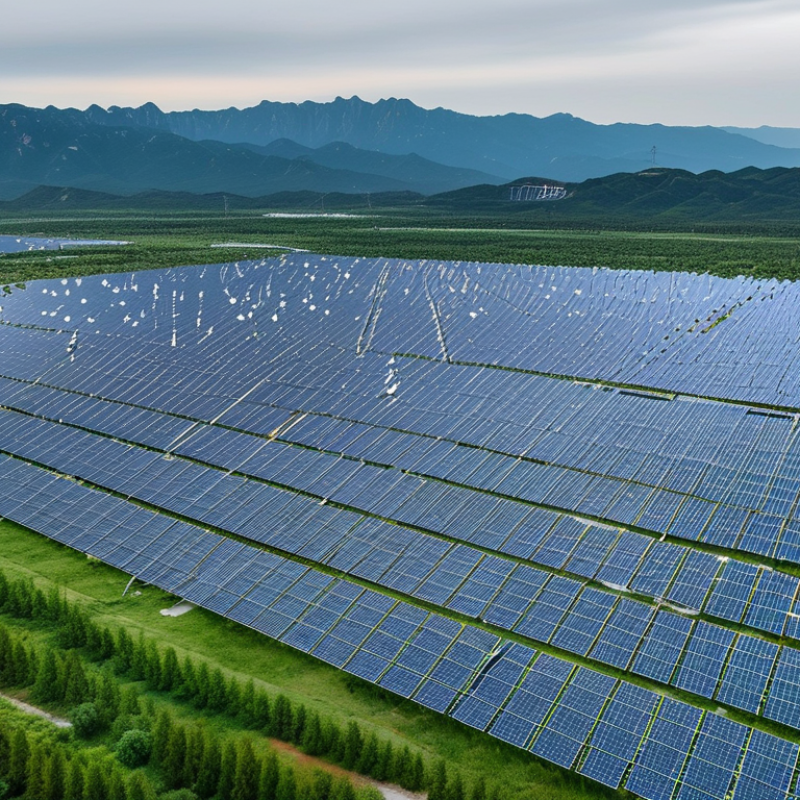
China Top 10 Solar Power System Manufacturers 2026

Definition and Scope of Solar Power System Manufacturers in China

Definition and Scope of Solar Power System Manufacturers in China

In the 2026 market, a solar power system manufacturer is more than a panel producer. It designs, makes, assembles, or integrates equipment that generates, converts, stores, or manages solar electricity. The scope may include modules, inverters, batteries, mounting structures, monitoring devices, and energy management controls. Some companies manufacture core components in their own facilities. Others combine certified parts into complete residential, commercial, or utility-scale systems. The boundary is not perfectly clean.

Practical evaluation requires more than a polished website. At a factory, buyers can inspect production lines, cell handling, welding quality, packaging, and batch traceability. Engineers should review efficiency data, temperature performance, safety testing, warranty terms, and maintenance procedures. Reliable manufacturers provide test reports, installation manuals, spare-part plans, and clear contact channels. Certification matters, but paperwork alone is not proof.

An authoritative ranking should also examine manufacturing capacity, quality-control records, delivery experience, and technical support after installation. Procurement teams can request sample inspection reports and recent project references. Real performance depends on design accuracy, local weather, grid conditions, and installation quality. Even strong manufacturers may show uneven service across regions. That is worth questioning. A supplier listed as a manufacturer may actually outsource most production, so ownership of facilities and responsibility for defects should be verified before contracting.

Key Criteria for Ranking the Top 10 Manufacturers in 2026

China Top 10 Solar Power System Manufacturers 2026

A credible 2026 ranking should measure more than factory size or shipment volume. Real operating experience deserves strong weight, especially across deserts, coastal areas, and cold northern regions. Manufacturers should provide verified records from completed projects, not only laboratory claims. Data matters most. Performance reports should cover energy yield, system availability, degradation, and failure rates over several years.

Technical quality also requires careful testing. Evaluators should compare module efficiency, temperature coefficients, inverter compatibility, storage safety, and resistance to humidity, salt mist, dust, and strong winds. Independent certifications and traceable testing can support these claims. Warranty terms need practical review, including response times, replacement procedures, and local service capacity. A long warranty means little if support is difficult to access.

Financial stability and supply-chain control should influence the ranking. A reliable manufacturer should maintain quality during demand spikes and disclose major component sources. Cybersecurity and software updates also matter for connected solar systems. Field reality differs. Published specifications may not predict every installation’s results, while regional service quality can change quickly. The ranking should therefore combine factory audits, customer evidence, third-party testing, and multi-year field data. Weighting these factors remains partly subjective, so the criteria should be reviewed as technology, regulations, and market risks evolve.

Profiles of China’s Top 10 Solar Power System Manufacturers

China’s top ten solar power system manufacturers reflect a market built for scale, integration, and rapid deployment.

The profiles include producers of photovoltaic modules, inverters, mounting systems, batteries, and complete utility-scale solutions. China’s National Energy Administration reported approximately 277 GW of new solar capacity in 2024, lifting cumulative capacity above 880 GW. That volume rewards manufacturers with stable supply chains and tested field performance.

The strongest profiles show more than factory size. They document module degradation rates, inverter efficiency, production traceability, and independent certification.

IEA PVPS reported that China remained the world’s largest solar market in 2024, while IRENA identified China as the leading contributor to global renewable capacity growth.

These manufacturers also support rooftop, commercial, and desert projects. Some operate large automated plants. Others compete through flexible engineering and regional service teams.

Reliability remains uneven.

Reliability remains uneven.

A credible profile should examine warranty handling, spare-part access, grid compatibility, and performance under dust, heat, and humidity. Factory audits matter, but operating records matter more. The China Photovoltaic Industry Association continues to report intense price pressure across the supply chain. That pressure can encourage technical progress, yet it may also reduce margins for long-term maintenance. Buyers should therefore compare measured output, not promotional claims. Ten manufacturers may appear similar on paper, but their project experience, testing discipline, and after-sales response can differ sharply.

Products, Technologies, and Market Strengths of Each Manufacturer

China’s top ten solar power system manufacturers in 2026 compete across modules, inverters, batteries, trackers, and complete utility-scale systems. Their strongest products use high-efficiency n-type cells, larger wafers, and bifacial module designs. These technologies improve output from rooftops and desert projects, but field performance still depends on heat, dust, and installation quality.

According to the IEA’s Renewables 2024 report, global solar PV additions approached 420 GW in 2023. China supplied most of that expansion. IRENA reported that solar capacity reached about 1,865 GW worldwide by the end of 2024, showing the scale of this market. Leading Chinese suppliers now offer modules above 22% efficiency, string inverters with advanced grid support, and battery systems designed for peak shaving. Strong manufacturers also provide remote monitoring, predictive maintenance, and 25- to 30-year performance warranties. Small details matter. A poorly designed cable route can reduce reliability.

Their market strength comes from integrated supply chains, large production capacity, competitive pricing, and extensive overseas certification experience. Some manufacturers combine manufacturing with project development, helping them understand financing and construction risks. However, rankings can change quickly. Shipment volume does not always equal bankability, service quality, or long-term durability. The IEA also warns that solar manufacturing capacity has expanded faster than demand, increasing price pressure and financial risk. Buyers should examine degradation data, warranty exclusions, factory audits, and local service coverage before selecting a supplier. Mistakes remain possible. That is worth remembering.

How to Choose a Reliable Chinese Solar Power System Manufacturer

Choosing a reliable Chinese solar power system manufacturer in 2026 requires more than comparing prices. A professional supplier should explain panel efficiency, inverter compatibility, battery chemistry, and expected output in plain language. Ask for recent test reports, factory certifications, production photos, and references from similar projects. A serious manufacturer will also discuss temperature, dust, shading, and local grid conditions.

Inspect how the company handles quality control. Request serial-number tracking, incoming material checks, burn-in testing, and final performance records. Review warranty terms carefully. Check who handles replacement parts, technical support, and shipping damage. A low price may hide weak after-sales service. That mistake can become expensive after installation. I would also compare the proposed system with your actual energy demand, not a perfect laboratory estimate. Real rooftops are rarely perfect.

Tips: Ask for a complete bill of materials. Confirm delivery dates in writing. Request a sample monitoring report. Test communication speed before signing. Visit the facility if the project is large. During discussions, notice whether the supplier admits limitations. Honest answers often matter more than polished presentations. Also verify payment terms, installation guidance, and maintenance training. A manufacturer that documents each step gives buyers stronger evidence of reliability. Still, documents can be outdated, so verify their dates and project relevance.

China Top 10 Solar Power System Manufacturers 2026 - How to Choose a Reliable Chinese Solar Power System Manufacturer

Evaluation Rank Key Evaluation Dimension Recommended Verification Benchmark Documents or Evidence to Request Why It Matters
1 Product Safety Certification PV modules should have test evidence aligned with IEC 61215 and IEC 61730; inverters should be assessed against applicable IEC 62109 requirements. Valid certificates, test reports, certificate scope, issuing laboratory, and product-model correspondence. Confirms that the equipment has undergone recognized performance and electrical-safety testing.
2 Manufacturing Quality Management An independently audited ISO 9001 quality-management system with documented incoming, in-process, and final inspection procedures. Current ISO 9001 certificate, factory audit report, quality-control plan, and nonconformity records. Reduces variation between production batches and improves traceability when defects occur.
3 Product and Performance Warranty Review the written product warranty, linear power warranty, exclusions, claim procedure, and warranty-transfer conditions; many current PV products offer approximately 10–15 years of product coverage and 25–30 years of performance coverage, but terms vary. Signed warranty document, degradation schedule, service contact, and legal entity responsible for claims. A long warranty is useful only when its terms are clear and enforceable.
4 Bankability and Financial Stability Prefer a manufacturer with audited financial statements, stable operating history, transparent ownership, and evidence of long-term after-sales capability. Audited reports, company registration, credit information, insurance coverage, and references from completed projects. The manufacturer must remain able to supply spare parts and honor warranty obligations over the system life.
5 Factory Capacity and Production Traceability Capacity claims should be supported by identifiable production lines, realistic lead times, batch records, serial-number tracking, and quality inspection checkpoints. Factory video or audit, production-line list, monthly capacity statement, sample serial-number records, and delivery history. Separates actual manufacturing capability from trading-company or outsourced-production claims.
6 System Compatibility Confirm compatibility among modules, inverters, batteries, energy-management systems, mounting structures, grid requirements, and local electrical codes. Datasheets, compatibility lists, single-line diagrams, grid certificates, and commissioning procedures. A technically compatible system improves safety, yield, monitoring accuracy, and serviceability.
7 Battery Safety and Documentation For lithium-based storage, request evidence of applicable battery safety testing, including IEC 62619 where relevant, plus transport documentation such as UN 38.3. Battery test reports, safety data sheet, UN 38.3 test summary, protection-system specification, and thermal-management details. Battery safety depends on cell quality, protection controls, enclosure design, and installation conditions.
8 Environmental and Operating Performance Check temperature range, humidity and salt-mist resistance, mechanical-load ratings, enclosure protection, and applicable environmental testing for the installation site. Environmental test reports, IP rating, mechanical-load data, installation manual, and site-specific design calculations. Products must match local climate, wind, snow, dust, corrosion, and temperature conditions.
9 After-Sales Service and Spare Parts Look for a defined response process, technical support contact, remote diagnostics, replacement policy, firmware-management procedure, and locally available spare parts. Service-level agreement, support-flow chart, spare-parts list, escalation contacts, and references from operating projects. Fast troubleshooting can reduce downtime and protect the expected return on investment.
10 Commercial Transparency and Total Cost Compare total delivered cost, Incoterms, payment conditions, certification costs, packaging, insurance, installation support, spare parts, and warranty-service expenses. Itemized quotation, technical offer, Incoterms, packing list, payment schedule, and clearly stated exclusions. The lowest purchase price may not provide the lowest lifetime cost or the best project value.

Note: The benchmarks above are manufacturer-neutral procurement criteria. Certification scope, warranty duration, product specifications, and regulatory requirements should be verified for the exact model, destination market, and project conditions.

FAQS

How should solar manufacturers be ranked in 2026?

Rankings should examine field experience, technical quality, financial stability, and service capacity. Factory size alone is insufficient. Multi-year evidence matters.

What field data should manufacturers provide?

They should provide energy yield, system availability, degradation, and failure-rate records. Reports should cover completed projects across deserts, coasts, and cold regions. Laboratory results can mislead.

Which solar technologies are gaining attention?

High-efficiency n-type cells, larger wafers, and bifacial modules are widely used. Some modules exceed 22% efficiency. Actual output still depends on heat, dust, and installation quality.

How do weather conditions affect solar system performance?

Dust can cover desert modules and reduce sunlight absorption. Salt mist may damage equipment near the coast. Cold weather creates different stresses. Wind resistance also requires testing.

What should buyers examine in a warranty?

Buyers should check warranty exclusions, response times, replacement procedures, and local service coverage. A 25-year performance warranty sounds strong. Access matters more.

Why are inverters and batteries important?

Inverters should support grid requirements and work reliably with selected modules. Battery systems can reduce peak electricity demand. Safety testing remains essential.

Does high shipment volume prove a manufacturer is reliable?

No. Shipment volume does not guarantee durability, bankability, or good after-sales service. Price pressure can also weaken quality control. Volume is only one clue.

What supply-chain and digital risks should buyers review?

Buyers should examine major component sources, factory audits, and quality consistency during demand spikes. Connected systems also need cybersecurity and regular software updates. Digital protection is easy to overlook.

Can a 2026 manufacturer ranking be completely objective?

Not completely. Weighting technical, financial, and service factors involves judgment. Published specifications may not predict every installation. Regional support can change quickly. No ranking is perfect.

Conclusion

This article provides an independent overview of China’s top 10 Solar Power System manufacturers in 2026, focusing on how companies are defined and evaluated within the industry. It examines key ranking criteria such as product quality, technological innovation, manufacturing capacity, certifications, project experience, service capability, financial stability, and international market reach. The discussion also introduces the general profiles of leading manufacturers without focusing on specific brand names, helping readers understand the structure and development of China’s solar energy manufacturing sector.

The article compares common products and technologies, including solar panels, inverters, energy storage solutions, mounting systems, and integrated power systems. It also explains how different manufacturers compete through efficiency improvements, intelligent monitoring, system integration, customization, and after-sales support. Finally, readers will learn how to choose a reliable Chinese Solar Power System manufacturer by reviewing technical specifications, compliance documentation, production standards, warranty terms, delivery capabilities, communication quality, and long-term service commitments.

Amelia

Amelia

Amelia is a seasoned marketing professional with a wealth of expertise in our company’s core offerings. With an unwavering passion for driving growth and innovation, she plays a pivotal role in shaping our marketing strategies and enhancing brand visibility. A key aspect of her responsibilities......