Voita Electronic Voita Electronic

What Is a Power Management System and How Does It Work?

Time:2026-10-12 Author:Ethan
0%

A Power Management System controls how electrical energy is generated, distributed, converted, monitored, and consumed. It may operate inside a laptop, factory, data center, electric vehicle, or renewable-energy installation. The system balances voltage, current, temperature, timing, and protection requirements. Its work often remains invisible. Yet a small failure can shut down an entire machine.

Power electronics authority Ned Mohan defines the field as “the technology associated with the efficient conversion, control, and conditioning of electric power.” This statement captures the system’s central purpose. A Power Management System can use sensors, regulators, converters, batteries, switches, controllers, and software. Sensors measure operating conditions in real time. Controllers interpret those signals. Power converters then adjust energy for each connected load. A processor may need a stable low voltage, while a motor requires controlled current and changing speed.

In practical operation, the system first receives electrical power from a grid, battery, generator, or solar source. It then distributes that power through protected pathways. DC-DC converters, inverters, and voltage regulators shape the output. Protection circuits respond to overloads, short circuits, heat, or abnormal voltage. Communication interfaces may also report energy use and equipment health. The result should be reliable, efficient, and responsive.

But “efficient” does not mean perfect. Every conversion creates some heat. Poor wiring, inaccurate sensors, and aging batteries can reduce performance. Real installations also face trade-offs between cost, safety, speed, and redundancy. Understanding these limitations makes the technology more useful. It turns a vague promise of smart energy into a system that engineers can test, measure, and improve.
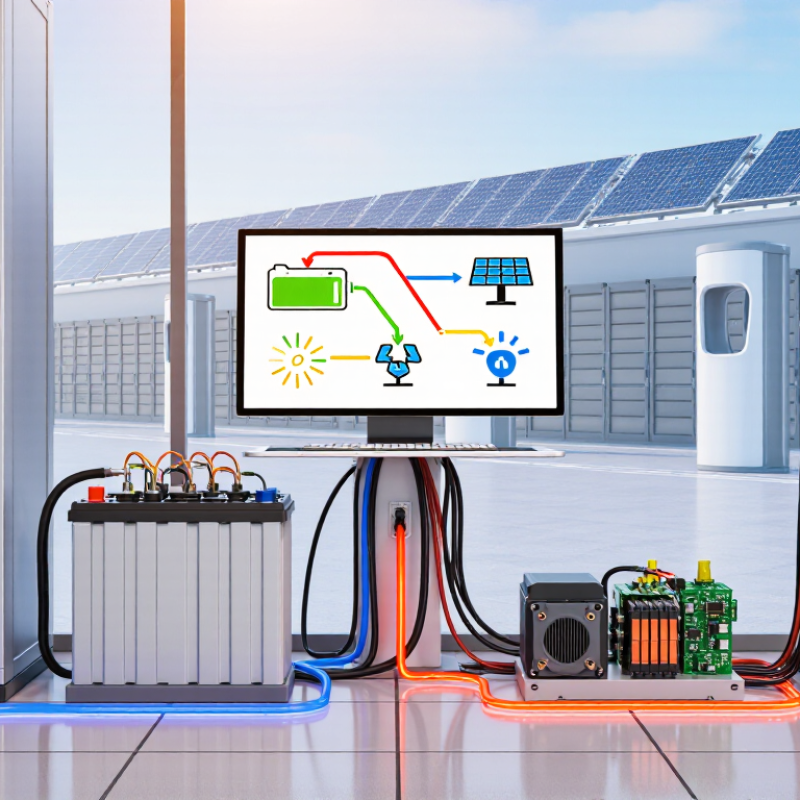
What Is a Power Management System and How Does It Work?

Definition and Core Purpose of a Power Management System

A power management system is a coordinated method for controlling, monitoring, and distributing electrical energy. Its core purpose is simple: deliver the right power, at the right time, with minimal waste and acceptable risk. In a building, it may monitor incoming voltage, measure circuit loads, and adjust equipment as demand changes. A dashboard can show a sudden 12-kilowatt spike near a production line. That detail turns an invisible electrical problem into an actionable event.

The system combines meters, sensors, control devices, software, and operating rules. Meters report consumption and power quality. Sensors detect heat, current, frequency, or unusual equipment behavior. Control logic can reduce noncritical loads, balance phases, or switch to stored energy during an interruption. This is not merely automation. It is an ongoing decision process. Good design starts with the actual site, because similar buildings rarely have identical electrical habits. Engineers review load profiles, backup needs, safety limits, and maintenance records before setting thresholds.

In practice, a useful system must be accurate, understandable, and resistant to bad data. Data can mislead. A loose sensor connection may create a false alarm, while a delayed meter can hide a real overload. Operators should test alarms, compare readings, and document changes instead of trusting a polished screen. The difficult part is often deciding which loads truly deserve priority. That choice can change with weather, staffing, or production schedules. No system is perfect. A thoughtful design leaves room for review when field conditions challenge the original plan.

Main Components and Their Roles in Power Management

What Is a Power Management System and How Does It Work?

Main Components and Their Roles in Power Management

A power management system coordinates electricity from generation, storage, and incoming utility sources. Its purpose is not simply to switch equipment on and off. It measures demand, protects circuits, and keeps power within safe operating limits. In a control cabinet, meters continuously track voltage, current, frequency, and energy use. Sensors may detect a sudden voltage dip or an overloaded feeder. Small details matter.

The controller acts as the system’s decision-making center. It compares real-time measurements with programmed limits and operating priorities. For example, it can reduce noncritical loads when demand rises sharply. Communication modules transfer data between meters, controllers, batteries, and supervisory software. A clear interface helps technicians identify alarms before equipment overheats. However, software decisions remain only as reliable as the sensor data beneath them.

Power converters regulate energy between alternating and direct current systems. Batteries provide stored energy, while battery management circuits monitor temperature, charging status, and cell balance. Switchgear, breakers, fuses, and protective relays isolate faults and reduce damage. Distribution panels then deliver controlled power to motors, lighting, or sensitive electronics. During commissioning, engineers test abnormal conditions, not just normal operation. A neat diagram can still hide a weak assumption. Real installations are messier, and maintenance access is sometimes overlooked. That deserves more attention.

What Is a Power Management System and How Does It Work? - Main Components and Their Roles in Power Management

Component or Function Primary Role How It Works Typical Measurements Main Benefits
Power Sources Provide electrical energy to the system. The system may receive power from a utility grid, generator, renewable source, battery, or a combination of sources. Voltage, current, frequency, active power, reactive power, and energy. Improves supply availability and supports source coordination.
Switchgear and Protection Devices Connect, disconnect, and protect electrical circuits. Circuit breakers, fuses, contactors, and protective relays interrupt fault currents or isolate unsafe sections. Overcurrent, short-circuit current, ground-fault current, and breaker status. Limits equipment damage, reduces fire risk, and supports safe maintenance.
Power Conversion Equipment Convert electrical energy into a form required by connected loads. Rectifiers convert AC to DC, inverters convert DC to AC, and converters adjust voltage or frequency. Input and output voltage, current, frequency, efficiency, and temperature. Enables compatibility between sources, storage systems, and loads.
Energy Storage System Store energy for backup, peak shaving, or load balancing. Batteries or other storage technologies charge when energy is available and discharge when demand or interruption requires support. State of charge, voltage, current, temperature, charge rate, and discharge rate. Improves resilience, reduces demand peaks, and supports renewable integration.
Voltage Regulation Keep voltage within an acceptable operating range. Automatic voltage regulators, transformers, or power electronic controls adjust voltage in response to changing conditions. RMS voltage, voltage deviation, voltage imbalance, and transient variations. Protects equipment and maintains stable operation.
Power Factor Correction Reduce unnecessary reactive power demand. Capacitor banks, synchronous equipment, or power electronic compensators offset reactive power drawn by inductive loads. Power factor, reactive power, apparent power, and line current. Reduces losses, releases system capacity, and can lower demand-related charges.
Load Management Match electrical demand with available supply and operating priorities. The system schedules, limits, shifts, or disconnects selected loads according to demand, cost, safety, or supply conditions. Load level, demand peaks, operating hours, priority status, and energy consumption. Prevents overloads and improves energy efficiency.
Monitoring Sensors and Meters Collect real-time information about system conditions. Voltage transformers, current transformers, power meters, and environmental sensors transmit measurements to the control system. Voltage, current, power, energy, frequency, harmonics, temperature, and humidity. Provides visibility for control, alarms, analysis, and maintenance.
Power Quality Monitoring Identify disturbances that can affect equipment performance. Meters record waveform and system data to detect sags, swells, interruptions, transients, imbalance, and harmonic distortion. Total harmonic distortion, voltage sag, voltage swell, frequency variation, and interruption duration. Helps prevent downtime and supports root-cause analysis.
Control System and Software Coordinate equipment and execute power management decisions. Controllers process sensor data, compare conditions with configured limits, and issue commands automatically or through operators. Setpoints, alarms, event logs, command status, trends, and system availability. Enables automated control, centralized supervision, and faster response.
Communication Network Transfer data and commands among devices, controllers, and user interfaces. Industrial communication links connect meters, protection devices, controllers, gateways, and supervisory software. Data quality, communication status, latency, device availability, and message errors. Supports coordinated operation, remote access, and system-wide reporting.
Alarm and Event Management Notify users about abnormal conditions and important system actions. Configured thresholds generate visual, audible, or remote notifications, while event logs preserve the sequence of changes. Alarm priority, timestamp, acknowledgment status, fault type, and restoration time. Improves response time, traceability, and operational safety.
Energy Reporting and Analytics Turn operating data into information for planning and improvement. Historical data is organized into dashboards, trends, reports, and performance indicators for comparison and analysis. Energy use, peak demand, load profile, efficiency, emissions factors, and operating costs. Supports energy savings, maintenance planning, budgeting, and compliance activities.

How a Power Management System Monitors and Controls Energy

A power management system monitors how electricity moves through a facility, building, or industrial site. It collects data from meters, sensors, and connected equipment. Operators can then see voltage, current, power demand, and energy consumption in near real time. A dashboard may show a sudden demand spike at 2:15 p.m., helping technicians investigate before costs or equipment stress increase.

The system also controls energy use. It can adjust loads, schedule equipment, balance circuits, or disconnect noncritical devices during peak demand. Automated rules respond within seconds, while operators can approve larger changes. In practice, readings are never perfectly clean. A loose sensor, delayed signal, or incorrect setting can create misleading results. Regular calibration and physical inspections remain essential, even when software appears reliable. I have found that clear alarms are more useful than endless data.

Tips: Set practical energy limits for each major load. Review unusual patterns every week. Test backup controls under safe conditions. Keep a record of changes, because small settings can affect performance. Avoid treating automation as a complete replacement for trained judgment. A system may flag a problem, but an experienced technician still needs to confirm the cause.

Common Types and Applications of Power Management Systems

Power management systems control how electrical energy is generated, converted, stored, and delivered. They monitor voltage, current, temperature, and load demand. A control circuit then adjusts power flow through feedback. This helps equipment operate safely and efficiently.

Common types include linear regulators, switching regulators, power management integrated circuits, battery management systems, and uninterruptible power supplies. Linear regulators provide clean output with low electrical noise, but they can waste energy as heat. Switching regulators use rapid electronic switching and inductors to improve efficiency. They fit compact devices, industrial controllers, and communication equipment. Battery management systems measure cell voltage and temperature. They also balance cells and limit unsafe charging conditions. Safety matters.

Applications vary widely. In a laptop, a power management system supplies separate voltage levels to the processor, memory, display, and charging circuit. In a solar installation, it coordinates panels, batteries, loads, and grid connections. In factories, it can reduce peak demand and protect motors from unstable power. Data centers use monitoring systems and backup supplies to maintain service during outages. The design must match the load profile, environment, and maintenance skill available. A technically efficient system may still fail when cooling is poor or sensors drift. Field testing often reveals these weaknesses. Labels can mislead. Engineers should verify real measurements, not rely only on rated specifications.

Benefits, Challenges, and Future Developments in Power Management

A power management system monitors, controls, and distributes electricity across a facility. Sensors track voltage, current, temperature, and load demand. Controllers then adjust equipment, batteries, and backup supplies in real time. This reduces waste and protects sensitive equipment from unstable power. The U.S. Department of Energy estimates that buildings use about 40% of total U.S. energy, leaving substantial room for efficiency improvements.

The benefits are measurable. Better load scheduling can lower peak-demand charges and reduce unnecessary equipment runtime. In practice, a dashboard may reveal a cooling unit running at full power in an almost empty room. However, implementation is not effortless. Poorly calibrated sensors can create false alarms. Staff may also trust automated decisions too quickly. That weakness deserves attention. The IEA’s Electricity 2024 report projects global data-center electricity demand could exceed 1,000 TWh by 2026, increasing pressure on power controls and grid capacity.

Future systems will coordinate renewable generation, storage, electric vehicles, and flexible loads. IRENA reported that renewables represented 92.5% of global power-capacity additions in 2024. This growth makes two-way power management increasingly important. Artificial intelligence may improve forecasting, but it cannot replace sound maintenance and secure data practices. Human review still matters. Systems must also remain understandable during failures, when a simple manual switch may be more useful than a complex algorithm.

What Is a Power Management System and How Does It Work?

A power management system monitors electricity supply and demand, controls equipment, improves efficiency, and helps maintain reliability. The global electricity mix below illustrates the operating environment that modern power management systems must balance.

In 2023, fossil fuels supplied approximately 61% of global electricity, while low-carbon sources supplied about 39%. This creates both opportunities and challenges: intelligent controls can reduce peak demand, integrate variable renewable generation, support storage, and improve resilience, but they must also manage fluctuations, cybersecurity risks, aging infrastructure, and increasingly complex electricity networks.

Data source: International Energy Agency, Global Energy Review 2024. Values are rounded global electricity-generation shares for 2023.

FAQS

What is a power management system?

It controls, monitors, and distributes electrical energy. Its goal is reliable power with less waste and acceptable risk.

How does the system monitor electrical conditions?

Meters measure voltage, current, frequency, and energy use. Sensors can detect heat, overloads, voltage dips, and unusual equipment behavior.

What does the controller do?

The controller compares live readings with programmed limits. It may reduce noncritical loads during a sharp demand increase.

Why are sensors and data accuracy important?

Poor data can create false alarms or hide real overloads. A loose sensor connection may show danger where none exists.

What happens during a power interruption?

Control logic may switch selected equipment to stored energy. Critical loads receive priority, while less important loads may remain off.

Which components protect circuits?

Breakers, fuses, protective relays, and switchgear isolate faults. They help limit damage and protect connected equipment.

How do batteries fit into power management?

Batteries store energy for later use. Battery circuits monitor temperature, charging status, and cell balance.

Can a polished dashboard guarantee safe operation?

No. Operators should test alarms and compare readings with field conditions. Screens can look perfect while a weak assumption remains hidden.

Why must system settings match the actual site?

Similar buildings may have different load patterns. Weather, staffing, production schedules, and maintenance history can change priorities.

What should engineers test during commissioning?

They should test overloads, abnormal readings, interruptions, and alarm responses. Normal operation alone is not enough. Real sites are messier.

Conclusion

A Power Management System is an integrated solution designed to monitor, control, and optimize the generation, distribution, and use of electrical energy. Its core purpose is to maintain a stable and reliable power supply while improving efficiency and reducing unnecessary consumption. Key components may include sensors, meters, controllers, communication networks, protective devices, and management software. Together, these elements collect real-time data, identify abnormal conditions, balance loads, regulate voltage, and support automatic or manual decision-making.

Power Management Systems are used in homes, commercial buildings, factories, transportation networks, and large energy facilities. They can range from simple monitoring systems to advanced platforms that coordinate renewable energy, storage equipment, and backup power. Their benefits include lower operating costs, improved reliability, stronger safety, and better energy planning. However, challenges such as installation expenses, system complexity, cybersecurity, and compatibility must be addressed. Future developments are expected to focus on smarter automation, predictive analysis, flexible energy coordination, and more sustainable power use.

Ethan

Ethan

Ethan is a seasoned marketing professional with a deep expertise in our company's innovative product line. With a passion for sharing knowledge and insights, he takes the lead in regularly updating our corporate blog, where he explores industry trends, product features, and effective marketing......