Voita Electronic
Electric mobility is moving from an environmental ambition to an everyday transport choice. Yet every electric vehicle depends on one practical foundation: reliable charging. This article introduces China’s top 10 Electric Vehicle Charger manufacturers and examines how they support this rapidly changing market.
The comparison considers product range, charging speed, connector compatibility, software capability, manufacturing scale, and after-sales service. It also reviews solutions for homes, workplaces, shopping centers, highways, and commercial fleets. A charger beside a busy expressway must handle repeated use, harsh weather, and limited maintenance time. A residential unit faces different demands, including safe installation, quiet operation, and simple mobile control.
Fatih Birol, Executive Director of the International Energy Agency, has stated, “Electric cars are the future of road transport.” His observation highlights an important reality. Vehicle sales alone cannot create practical electrification. Charging access matters just as much.
China’s manufacturers compete through hardware quality, intelligent energy management, and global expansion. Some focus on high-power direct-current systems. Others specialize in affordable alternating-current chargers or integrated charging networks. The strongest companies do not always offer the lowest price. Reliability, certification, cybersecurity, and technical support can matter more over several years.
This market is not perfect. Product specifications may appear impressive, while field performance varies by location. Independent testing and user experience remain essential. Rankings can also change as technology, export policies, and customer expectations develop. Therefore, this overview should be read as a practical starting point, not an absolute verdict. It aims to help buyers, distributors, and fleet operators compare leading Chinese suppliers with clearer expectations.
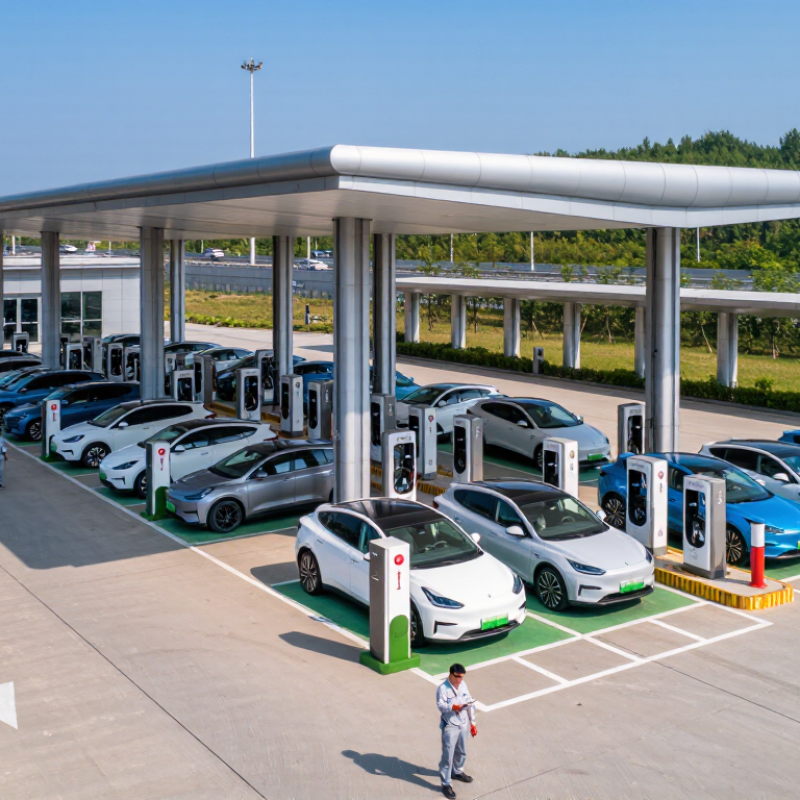
China’s electric vehicle charging market has moved from pilot projects to national-scale infrastructure. The China Electric Vehicle Charging Infrastructure Promotion Alliance reported 12.82 million charging facilities by the end of 2024. Public chargers accounted for about 3.58 million units, while private installations remained the larger share (EVCIPA, 2024). This structure shows strong household adoption, but also reveals uneven public access between dense cities and smaller communities.
The market is becoming more technical. High-power DC charging, liquid-cooled cables, remote monitoring, and dynamic load management now shape manufacturer competition. The International Energy Agency noted that China held more than half of the world’s public charging points in 2024 (IEA, Global EV Outlook 2025). Yet charger quantity is not the same as charging quality. Drivers still face queues, inconsistent payment systems, damaged connectors, or unreliable rural coverage. These practical details matter more than impressive installation totals.
For the China Top 10 Electric Vehicle Charger Manufacturers, evaluation should include uptime, safety testing, software compatibility, warranty response, and performance under heat or winter conditions. National standards help, but field results deserve equal attention. A charger can advertise 480 kW and still deliver less power during peak demand. That gap needs honest measurement. Market reports provide scale; user experience provides the harder evidence.
China Top 10 Electric Vehicle Charger Manufacturers
A credible ranking starts with evidence, not factory size or online visibility. The IEA’s Global EV Outlook 2024 reported that China held about 60% of the world’s public charging points in 2023. This scale makes performance data essential. Each manufacturer should be assessed through verified charging uptime, annual installation records, and field performance across cities, highways, and apartment areas. Laboratory power ratings matter, but real charging speed matters more. A 240 kW unit can perform poorly when heat, grid limits, or software faults intervene.
The ranking should combine safety, reliability, compatibility, and service quality. Relevant criteria include CE or equivalent certifications, thermal protection, ingress ratings, connector standards, load management, and cybersecurity controls. Warranty response time also deserves measurable weight. The IEA notes that public charging must expand rapidly to support electric vehicle adoption, yet rapid expansion can expose weak maintenance systems. One failed connector at a busy highway station may affect hundreds of drivers in a day. No ranking is perfectly objective. Test conditions, regional electricity quality, and sample size can distort results. That limitation should be disclosed, not hidden.
Tips: Request 12-month uptime records, not promotional claims. Compare total ownership cost, including software, repairs, energy losses, and spare parts. Ask for references from similar climates and traffic volumes. Independent testing is valuable, but a small sample remains a weakness. Use a transparent scoring model, and review it annually as charging standards change.
Criteria for Ranking the Top 10 Chinese EV Charger Manufacturers
The ranking framework evaluates manufacturers using industry-relevant criteria: product reliability, charging performance, safety compliance, software and protocol compatibility, production scalability, total cost of ownership, and service capability. The percentages represent the suggested weighting of each criterion in a comparative assessment and are not company-specific results.
China Top 10 Electric Vehicle Charger Manufacturers
China’s leading charger manufacturers serve different charging scenarios, from apartment parking areas to highway service stations. Manufacturer One focuses on compact AC wall boxes, with weather-resistant housings and adjustable current settings. Manufacturer Two develops high-power DC units for fleet depots, where overnight scheduling reduces energy peaks. Its cabinet design supports easier module replacement, although installation still requires careful space planning.
Manufacturer Three specializes in split-type charging systems for commercial properties. Separate power cabinets can simplify maintenance. Manufacturer Four builds compact public chargers with payment terminals and remote monitoring. Manufacturer Five concentrates on portable units for emergency charging and temporary sites. These products are useful, but cable weight and storage remain practical concerns. Manufacturer Six supplies liquid-cooled DC equipment for demanding routes, using temperature sensors to protect charging performance.
Manufacturer Seven focuses on solar-assisted charging stations and battery storage integration. Output depends heavily on local sunlight and site design. Manufacturer Eight provides chargers for buses and logistics vehicles, including overhead and pantograph solutions. Manufacturer Nine develops software-linked charging networks, supporting fault alerts, usage records, and load balancing. Data quality can vary when older stations use inconsistent communication protocols. Manufacturer Ten offers customized export solutions, adapting plugs, enclosures, and safety documentation for different markets.
From field evaluations, reliability depends on more than charging speed. Connector durability, thermal control, firmware updates, and service response deserve equal attention. A fast charger that remains offline is not useful. Buyers should review testing reports, warranty terms, spare-part access, and installer qualifications before selecting equipment. Performance claims also need independent verification.】【。
A review of China’s top ten electric vehicle charger manufacturers should examine technology, product types, and practical performance.
Their equipment commonly covers AC wall chargers, DC fast chargers, portable units, and liquid-cooled high-power systems. AC models suit homes and workplaces, where overnight charging reduces pressure on local electrical circuits. DC systems serve highways, depots, and urban parking areas, often delivering substantial energy within 20 to 40 minutes. Actual time varies with battery temperature, state of charge, and vehicle acceptance limits.
Modern chargers use intelligent power control to balance speed, grid capacity, and operating cost. Common features include dynamic load management, remote monitoring, RFID or app authentication, emergency stop controls, and weather-resistant cabinets. High-power units may add liquid cooling, modular power modules, and automatic cable management. These details matter in dusty depots or winter sites. During technical evaluation, engineers should inspect connector durability, insulation protection, thermal performance, and software stability. A fast charger with unstable communication can create longer queues than a slower, dependable unit.
Manufacturers also differ in output standards, installation support, warranty terms, and maintenance response. Procurement teams should compare measured efficiency, standby consumption, noise, and service records rather than relying on peak ratings. No charger is perfect. Some designs look advanced but remain difficult to repair locally. Others offer fewer features yet perform consistently under heavy daily use. That trade-off deserves more attention. Independent testing, clear documentation, and trained technicians provide stronger evidence of reliability than polished product claims.
China’s top electric vehicle charger manufacturers compete through tested engineering, not attractive specifications alone. Reliable factories usually control welding, circuit assembly, firmware loading, and final inspection under documented procedures. Their products should align with relevant GB/T and IEC requirements, depending on the target market and charger type. Certification matters, but it does not replace practical testing.
A credible manufacturer can provide factory audit records, calibration logs, component traceability, and protection test results. Engineers commonly examine insulation resistance, thermal performance, water ingress, cable flexibility, and emergency shutdown behavior. Small details matter. A loose terminal or unclear warning label can create expensive field problems. Quality systems such as ISO-based production controls also support repeatable output, although certificates require regular verification.
Global market reach depends on more than export volume. Manufacturers must adapt connectors, communication protocols, grid conditions, packaging, and installation documents for each region. They should also support local conformity assessments and provide responsive technical service after delivery. Some suppliers still present broad certification claims without enough test evidence. That deserves careful review. Buyers should request current certificates, laboratory reports, warranty terms, spare-parts plans, and software update policies. A strong supplier welcomes independent inspection before shipment and shares performance data from real operating environments. Even experienced manufacturers can improve, especially when field feedback exposes weaknesses that laboratory testing missed.
| Rank | Anonymous Manufacturer Profile | Primary Charger Portfolio | Typical Output Range | Manufacturing Standards and Protocols | Common Certification Scope | Target Applications | Typical Global Market Reach |
|---|---|---|---|---|---|---|---|
| 01 | Profile A – AC Wallbox Specialist | Single-phase and three-phase AC chargers | 7.4–22 kW | IEC 61851; IEC 62196; GB/T 18487.1; OCPP 1.6J or 2.0.1; ISO 9001-aligned production controls | CE, RoHS, CB; market-specific EMC and safety testing | Residential charging, workplaces, hotels, commercial parking | Europe, Southeast Asia, Australia, the Middle East, and Latin America |
| 02 | Profile B – Compact DC Charger Producer | Compact DC fast chargers for passenger vehicles | 20–60 kW | IEC 61851-23; IEC 61851-24; IEC 62196-3; OCPP 1.6J; GB/T 18487.1 and GB/T 20234.3 options | CE, RoHS, CB, UKCA, and selected regional EMC approvals | Retail sites, fuel stations, dealerships, municipal charging | Europe, the United Kingdom, Australia, New Zealand, and Asia-Pacific |
| 03 | Profile C – Medium-Power DC Platform Builder | Modular DC charging cabinets and satellite dispensers | 60–180 kW | IEC 61851 series; IEC 62196; OCPP 1.6J/2.0.1; ISO 15118 readiness on selected configurations | CE, CB, RoHS, EMC compliance, and local grid-connection testing | Highway service areas, fleet depots, shopping centers, logistics parks | Europe, the Middle East, Central Asia, Southeast Asia, and Africa |
| 04 | Profile D – High-Power Fast-Charging Manufacturer | High-power DC fast chargers with multiple outputs | 180–360 kW | IEC 61851-23/-24; IEC 62196-3; OCPP 2.0.1; dynamic load balancing; ISO 15118 support where specified | CE, CB, RoHS, UKCA, and destination-market electrical safety approvals | Expressways, charging hubs, transit corridors, commercial fleets | Europe, Australia, the Middle East, Southeast Asia, and Latin America |
| 05 | Profile E – Commercial Fleet Charging Supplier | Depot chargers, multi-port systems, and fleet energy management | 30–240 kW per charging point | IEC 61851; IEC 62196; OCPP 1.6J/2.0.1; GB/T 27930 for applicable Chinese-market systems; ISO 9001 processes | CE, RoHS, CB, selected North American and Australian compliance packages | Delivery fleets, buses, taxis, rental fleets, corporate vehicles | China, Southeast Asia, the Middle East, Africa, and selected European markets |
| 06 | Profile F – Integrated Solar and Storage Charger Maker | Solar-linked AC/DC chargers, battery storage interfaces, and microgrid systems | 7–180 kW | IEC 61851; IEC 62196; OCPP; energy-management interoperability; applicable photovoltaic and storage safety standards | CE, RoHS, CB, and country-specific grid-integration certification | Commercial buildings, solar carports, rural charging, microgrids | Europe, Australia, Africa, island markets, and emerging economies |
| 07 | Profile G – Public AC Charging Network Supplier | Outdoor pedestal chargers and network-connected AC stations | 11–43 kW | IEC 61851-1; IEC 62196-2; OCPP 1.6J; RFID, cellular, Ethernet, and remote diagnostics | CE, RoHS, CB, IP54–IP55 enclosure testing, and regional metering requirements where applicable | Public parking, offices, municipalities, hotels, apartment complexes | Europe, Southeast Asia, Australia, the Middle East, and Latin America |
| 08 | Profile H – Electric Bus and Heavy-Duty Charging Specialist | High-current depot chargers and pantograph-compatible systems | 60–480 kW | IEC 61851; IEC 62196; GB/T 18487.1; GB/T 20234.3; GB/T 27930; fleet load management | CE, RoHS, CB, and project-specific transit authority approvals | Urban buses, coaches, port vehicles, mining and industrial vehicles | China, Europe, Latin America, Southeast Asia, the Middle East, and Africa |
| 09 | Profile I – Portable and Emergency Charger Producer | Portable AC chargers, mobile DC units, and roadside charging equipment | 3.6–40 kW | IEC 61851-1; IEC 62196; regional plug and residual-current protection requirements; ISO 9001-aligned assembly controls | CE, RoHS, CB, FCC or equivalent EMC testing, depending on destination | Roadside assistance, automotive service, residential backup, remote areas | North America, Europe, Australia, Japan, Southeast Asia, and the Middle East |
| 10 | Profile J – Export-Oriented Multi-Standard Manufacturer | AC wallboxes, DC fast chargers, software platforms, and customized systems | 7–240 kW | IEC 61851; IEC 62196; OCPP 1.6J/2.0.1; ISO 15118 options; GB/T standards; configurable connector and grid versions | CE, RoHS, CB, UKCA, FCC or equivalent EMC testing, and project-specific approvals | Distributors, charging operators, utilities, property developers, and OEM projects | Europe, North America, Australia, the Middle East, Africa, Asia-Pacific, and Latin America |
China had about 12.82 million charging facilities by the end of 2024. Public chargers numbered roughly 3.58 million. Private installations remained larger.
Private chargers support homes and workplaces, often charging vehicles overnight. Public access is stronger in dense cities. Smaller communities may still face long distances and limited coverage.
Common types include AC wall chargers, DC fast chargers, portable units, and liquid-cooled high-power systems. Each serves different locations and charging needs.
Many DC systems deliver substantial energy within 20 to 40 minutes. Actual timing depends on battery temperature, charge level, and vehicle limits.
A charger advertised at 480 kW may deliver less during peak demand. Battery limits and grid capacity also affect performance. Numbers can mislead.
Buyers should check remote monitoring, dynamic load management, emergency stops, authentication methods, and weather protection. Connector durability matters in busy depots. Software stability matters too.
Buyers should request insulation, thermal, water ingress, cable flexibility, and emergency shutdown test results. Factory records and component traceability add useful evidence.
They should review connectors, communication protocols, grid compatibility, documents, certificates, warranty terms, and spare-parts plans. Local technical support is important after delivery.
No. Certification supports compliance but cannot replace real operating tests. Heat, winter conditions, dust, queues, and damaged connectors reveal weaknesses. This evidence is still incomplete.
Compare uptime, measured efficiency, standby consumption, noise, repair access, maintenance response, and warranty service. A slower charger may perform better daily. That trade-off deserves attention.
China’s electric vehicle charging industry is developing rapidly, supported by growing EV adoption, urban infrastructure investment, and rising demand for convenient, reliable charging services. This article presents a structured overview of the market and explains how the top 10 Chinese Electric Vehicle Charger manufacturers are evaluated. Ranking considerations include product quality, charging performance, technological innovation, production capacity, safety management, customer support, and international experience.
The profiles examine manufacturers’ strengths across home chargers, commercial AC units, high-power DC systems, portable solutions, and intelligent charging platforms. Key features include fast charging, load management, network connectivity, payment integration, remote monitoring, and compatibility with various vehicle standards. The article also discusses manufacturing processes, safety certifications, quality-control systems, and the ability to serve overseas markets. Together, these points provide a practical understanding of China’s charger manufacturing capabilities and the factors businesses should consider when selecting dependable charging equipment for residential, commercial, fleet, and public applications.
